


Ceramides vs Peptides: What’s the Difference?
Share
When it comes to skincare ingredients, some play supporting roles, quietly doing their bit, while others make such a difference that you notice when they’re gone. Ceramides and peptides fall into the latter category. Often mentioned in the same breath and sometimes even treated as though they’re interchangeable, these two actives are incredibly different but equally important when it comes to the health and vitality of your skin.
One focuses on protection, while the other is performance driven. So, we can understand why you might be a tad confused about whether you need one over the other, or if in fact your skin could benefit from both. To discover all you need to know about both powerhouses and where they may fit in your skincare regime, read on.
Ceramides Explained
Ceramides live right at the top of the skin, forming part of that protective seal we call the barrier. They’re waxy lipids, aka natural fats and oils that the skin needs to protect itself against environmental aggressors like wind, heat, bacteria, dirt and pollutants.
“Ceramides act as the glue that holds skin cells together, forming a protective barrier that prevents moisture loss and guards against environmental damage,” says Dermatologist Dr Sharon Belmo. When that glue starts giving way, the skin barrier is compromised. Dermatologist Dr Emma Amoafo-Mensah sees this often. “A leaky skin barrier doesn’t just cause dehydration but it also makes the skin more susceptible to inflammation.” And where inflammation and water loss occur, dry, rough skin, irritation, pigmentation, lines, wrinkles, sagging, and even acne follow. In other words, when ceramides dip, skin issues soar.
Declining Ceramide Levels
Some people naturally have a generous supply of ceramides; others don’t. Genetics has a lot to do with it - ageing and lifestyle practices even more so.
Scientists are yet to figure out why, but studies show that ceramide levels in Black skin are lower than that of their white counterparts. However, ceramide decline comes for us all one way or another. “Production naturally declines with age, particularly after the age of 30 - while harsh skincare products can also decrease our stores,” shares Belmo.
That potent acid toner you love using every night could be interrupting barrier function, while the cleanser that leaves your face feeling squeaky clean is likely stripping lipids too. And once ceramides are compromised your complexion is destined not to look its best.
Ceramides in Skincare
“Using skincare products that contain ceramides helps reinforce the skin barrier and prevent trans epidermal water loss,” explains Belmo. A skin-identical active, you’ll often find not only ceramides in barrier repair products, but ceramide precursors like phytosphingosine and sphingosine too. These work to stimulate our own natural ceramide production to further improve hydration levels and encourage barrier repair.
Peptides Explained
If ceramides are the guardians of the skins surface, peptides are the communication managers working underneath. “Peptides are short chains of amino acids which makes them the building blocks of proteins like collagen, and elastin. They work as messengers that signal the skin to produce more of these structural proteins, helping to improve elasticity, and texture, for firmer, more youthful looking skin,” explains aesthetic doctor Raquel Amado.
Their popularity isn’t accidental. Formulators love them because they’re effective without being aggressive. “They’re also incredibly versatile; as they don’t just do one thing,” adds Aesthetic Doctor, Emmaline Ashley.
Peptide Benefits
Different peptides speak different “languages”. Signal peptides encourage collagen production. Carrier peptides assist with repair and barrier strength. Enzyme-inhibiting peptides help stop the very processes that break collagen down. And neurotransmitter-inhibiting peptides soften the look of repeated facial movement.
They really have no drawbacks, though they shouldn’t be paired with powerful exfoliants. “Exfoliating acids like glycolic or salicylic acid can break down the peptide bonds, making them less effective,” says Ashley. You can still use both, just not at the same time.
Ceramides vs Peptides
So, as you’ve discovered peptides and ceramides work in different areas of the skin. Ceramides focus on barrier protection and moisture retention, while peptides improve structural support. Think of collagen as the scaffolding, and peptides as the structural engineers in charge of maintenance. The two shouldn’t be competing for your affection, they should tag team to bolster your barrier and keep skin firm and youthful.
HydroPeptide formulas with ceramides
HydroPeptide gives you the best of both worlds by combining ceramides and peptides in one single formula to support your skin from the inside out.
LumiFirm
A lightweight lotion designed to brighten, smooth and tighten the skin on the body. Ceramides, niacinamide and biotin work alongside firming peptide complexes to improve elasticity and refine uneven tone. It sinks in quickly and has a fresh, uplifting fragrance that makes the whole experience feel more like a ritual than a routine.
Barrier Builder
A restorative option for facial skin that feels unsettled or irritated. Ceramides help restore the barrier, while clinically backed hydrators ease discomfort and support recovery. It’s particularly useful after over-exfoliation or during colder months when the skin’s threshold feels lower than usual.
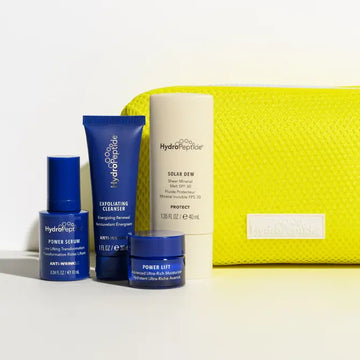
Power Lift
A rich face cream that blends pineapple-derived ceramides with a suite of peptides to support long-term firmness and moisture retention. It cushions the skin without feeling heavy, making it especially good for dry or mature complexions that need both nourishment and visible rejuvenation.
How to Incorporate Ceramides and Peptides Into Your Skincare Routine
Since both actives are beneficial and work well together, the best way to incorporate them is at the same time. However, if your skin is dry, irritated, sensitive, flaking or rough start with some intense barrier support by way of a ceramide-focused formula. Then once your skin has recovered you can look to address other concerns like lack of firmness, lines, and dullness. Over time, you’ll notice your skin has less ‘issues’ and looks and feels smoother, and stronger.